Showing posts with label Teotihuacan. Show all posts

July 20, 2011

The Culture and Controversy of Cuicuilco

Mexico City is built on the remains of the Aztec capital of Tenochtitlán. Before Tenochtitlán, there was another ancient city, the oldest in the entire valley. Cuicuilco was Mexico's Pompeii; a thriving, important place, with pyramids pre-dating Chichén Itzá and Teotihuacan, and a population of 20,000 people. Then the Xitle volcano erupted.

Cuicuilco


Parts of Cuicuilco are still visible now, but most is under the lava; and Mexico City is creeping on top of the remains.

In Aztec times, the lava plains were a wilderness. Miscreants were banished there, to die of exposure or to be bitten by the rattle snakes, which lived in the area then. Today, this is El Pedregal de San Ángel, or simply El Pedregal, an upper class residential district of Mexico City. Mansions cling to the mountainside, overlooking the major northern boulevards of the capital; hemmed in, to the east, by the University.

In the 1940s, this entire developement was designed and built by Luis Barragán. His vision was to create modernist houses in harmony with the landscape. Outcrops of volcanic rock, frozen in time since its post-eruption cooling, became garden walls; smoother plains became walkways and roads.

El Pedregal


He called this the Gardens of El Pedregal. Experts have called it 'a turning point in Mexican modern architecture'. The complex was accessed through the Plaza de las Fuentes (Plaza of the Fountains), with fountains that intermittantly cast water high into the air. Prominent artists were brought in to add their talent to the aesthetics of the place. Chucho Reyes advised on colors; Mathias Goeritz created sculptures; Xavier Guerrero allowed the use of his specially formulated, rust-free paint. But the houses themselves were pure Barragán.

El Pedregal


This is where the great and the good of the Mexican upper classes lived and still live. The years have lost much of the original architecture, under layers of expansion and home extensions. Mansions got larger and even the iconic Plaza de las Fuentes is now just a side-street, edged with sprawling housing plots.

However, those interested in how it once was can visit Mexico City's Museo Nacional de Arquitectura (National Museum of Architecture), in the Instituto Nacional de Bellas Artes, on Avenida Juárez and Eje Central, in Lázaro Cárdenas. There is a permanent exhibition of Barragán's El Pedregal.

The Gardens of El Pedregal isn't the only modern development crowding in and on top of Cuicuilco. In 1997, Mexico made legal history, when members of the public sued the president and other dignitaries, over the construction of a shopping center and entertainment complex there. (Cuicuilco: Public Protection of Mexican Cultural Patrimony in an Archaeological Zone.) Building ultimately went ahead, but it left safeguards in law against future destruction of the site.

El Pedregal


So what is all of the fuss about? Cuicuilco was certainly the oldest human settlement in the Valley of Mexico; it is possibly one of the most ancient in the entire country. The foundations of the city were laid around 700 BCE. It is believed that, at the time, it was the most important civic-religious center in the Mexican Highlands. Beneath the lava there are pyramids, which could well dwarf those on the surface. Some have theorized that they might have been the largest man-made pyramids in the world.

Cuicuilco


Little is known about the people who built Cuicuilco, though the exchange of trade goods shows that they interacted with the Olmec. Archaeology has pointed towards a hierarchical society, with chiefs at the top and slaves at the bottom. These were a deeply religious people, who buried their dead with ceramic grave goods. Skulls have been found, with teeth filed into sharp spikes. These were a people fearsome to behold.

The artwork from Cuicuilco was exquisite. A new era of ceramics was born here, starting around 600 BCE. Their pottery was unique to the age and highly prized in distant cities, amongst other tribes. This wasn't merely bowls and cups. They were idols made in the image of deities, demonstrating remarkable craftsmanship.

Cuicuilco
An artist's impression of Cuicuilco in its heyday


Their city must have been spectacular. Terraces, plazas and many residences have been uncovered. They had engineering knowledge - irrigation ditches fed their fields and brought water from the lake into the city; canals ran like arteries through their streets. There is evidence of warfare or attack. Fortifications surrounded them.

But mostly what would have been seen, from a vantage point on the highlands, were the oval and conical shapes of the farmer's cottages. For miles around the ceremonial center, there were the fields. Corn, maize, beans, squash and tomatoes were amongst the crops cultivated here. Smaller temples, some with up to five altars, dotted the landscape between the massed agriculture.

Cuicuilco sprawled, the mega-city of its day, much like its modern counterpart, Mexico City. Thousands of people were attracted into its midst, generations of them adding and building and expanding. Their gods grew and changed in prominence. By the end, the fire deities had presidence; but that didn't stop the volcano erupting.

Cuicuilco
Eruption of Xitle by Gonzales Camarena

Xitle blew twice, once in 50 BCE and once in 400 CE. This cinder cone volcano still stands above Mexico City, in the Ajusco range to the south-east. The pyroclastic flow of lava, from both major eruptions, covered substantial parts of the city of Cuicuilco. The final one led to its abandonment. From hereon, the culture of the population can be seen spread out across Mexico; while the Aztec city of Tenochtitlán was founded further down in the valley, beside and upon the lake.

For those campaigning against further modern development of the area, the importance of the history is at the forefront. This was one of the most prominent early cultural centers in Meso-America; yet too few digs have been untaken by archaeologists.

However, there is a small, but very vocal group who want work to stop because it's disturbing and obscuring the lava plains. They have pointed out that examining the extent of the previous eruptions might be of vital consideration for future crisis management. After all, if Xitle blows again now, Mexico's capital city is now right in its path. The homes of many of Mexico's richest residents, including the President, is on top of the area buried before.

There are also some who say that the Cuicuilco people never quite went away. There are pervasive stories of the ghosts of priests and sacrificial victims, in the homes of those living atop the lava plains. Perhaps they have an urgent message, from personal experience, for those intent on ignoring the huge swathes of volcanic rock. Or maybe they are just stories.

Cuicuilco


Cuicuilco is open to the public, as both an archaeological site of historical importance and a nature reserve. As well as the interest in the site itself, its heights afford a stunning view over Mexico City. Tourists and locals alike are often found strolling across it, climbing onto the summit of its remaining pyramid.

During the spring equinox (around March 21st), there is a sudden boom in visitors. The area becomes once again a place of religious pilgrimage, as people gather to greet the dawn. The sun's rays, on that morning, from the top of the pyramid is believed to refresh the spirit and bring blessings upon their lives in the following year.

Cuicuilco


Whatever your beliefs, Cuicuilco is a beautiful place to meander upon. It is recommended to anyone visiting Mexico City.

May 4, 2011

Wilkommen President Wulff!

Ranking 14th in the global economy, Mexico's fortunes are on the rise! This little snippet hasn't gone unnoticed; a steady stream of world leaders have been visiting the country of late. This weekend was the turn of Germany's President Christian Wulff. He was closeted for hours with President Calderón. Then, once the vitally important, but ultimately boring, business stuff was over, it was time for a bit of sight-seeing.

President and First Lady Wulff in Mexico

President Wulff arrived in Mexico City on Sunday. He and his glamorous First Lady, Bettina Wulff, wasted no time before taking in some of the country's ancient architectural treasures. They are photographed (above) at Teotihuacan, atop the famous Pyramid of the Moon. This was once the Aztec capital and it is located not far out of its modern counterpart.

The next day, the couple were received by President Calderón at an official welcome party. The two leaders were photographed greeting local children, before the more formal introduction to dignitaries and politicians. They were also taken on a tour of the historic Metropolitan Cathedral of the Assumption of Mary of Mexico City. There was a dinner party given in their honor during the evening.

President and President Calderon in Mexico

In a mixture of fun, business networking and photo opportunites, they had a hectic schedule. It included visits to an orphanage; a nutrition research center; downtown Guanajuato; and a whirlwind tour of some of the 1,200 German owned industries based in Mexico. President Wulff also gave a keynote speech at the National Autonomous University of Mexico and met with human rights representatives.

Business confidence is high for Mexico at the moment. The country officially stepped out of the international recession at the end of 2010, while many other nations are still crippled under it. Economic growth topped 5.5% last year and it shows no sign of slowing down. In January, this year, the International Monetary Fund happily approved a $72b credit line for Mexico, as a safety net against European and US/Canadian investors unable to make good on their stakes. Meanwhile, India has elevated Mexico to Most Favored Trade Nation status, in a 10 year bilateral agreement signed just last month.

President and First Lady Wulff in Mexico

Germany has already invested a large amount of capital in Mexican businesses, creating around 130,000 jobs in the process. President Wulff, in his speech, stated that Mexico is 'a good friend and an outstanding partner for Germany'. He also urged German private investors to seek their profits here. It was much of the same tone and rhetoric that Britain's Deputy Prime Minister, Nick Clegg, used on a similar visit last month.

President and First Lady Wulff in Mexico

However, President Wulff had more to say. He is very interested in the technological innovations, in creating green and sustainable energy, which are coming out of Mexico. An agreement has been made, with President Calderón, that Mexico and Germany should work together on anything that would combat climate change, while protecting the environment. Knowledge, research and technology will be shared in a bilateral pact.

President Wulff said, "Renewable energy will be one of the issues of the future, (while) the professional training of apprentices and students will be another area for cooperation in the future, as well as more investment by German companies in Mexico and by Mexican companies in Germany."

Mexico and Germany

All in all, it seems to have been a very successful trip!

March 22, 2011

Spring Equinox at Mexico's Ancient Monuments

It is nearly dawn on the Spring Equinox and the crowds gather at the foot of El Castillo. They are about witness the descent of the God on Earth, as He passes down the steps and into the ground beneath. It is guaranteed. It is seen in Chichén Itzá every year and it is about to happen right now. An expectant murmur passes through, then a pause and suddenly an almighty roar of exaltation.

Spring Equinox at Chichén Itzá

It is only at the equinox that a stunning piece of Maya architectural genius becomes apparent. The side of the steps were fashioned in such a manner that, when the sun shines on them in a certain way, the feathered serpent God, Kukulkan, can be clearly seen. He is picked out in light and shade, with his snake-like back undulating down the steps. This can only be seen at dawn on the equinox.

Thousands traditionally congregate at the base of El Castillo (aka the Temple of Kukulkan) to witness this. Many will have been there all night, in a vigil, waiting. They are not all Mexicans. In fact, the vast majority are spiritual tourists, who have come to join their Mexican brothers and sisters, in this awe-inspiring event.

Kukulkan arrives to raptuous cheers; though many stand in silent meditation. All are allowing the calm, positive energy of the moment to penetrate their spirits. Traditional dancing and music soon turns the religious into a fiesta, as such things often do in Mexico.

Meanwhile, NTD TV have reported upon the events in Teotihuacan, near Mexico City: 'Thousands Flock to Mexico's "Pyramid of the Sun" to Welcome Spring Equinox'.


The Spring (or Vernal) Equinox occurs when day and night are exactly equal in length; there are twelve hours between sunset and dawn. The Earth, as it orbits around the sun, also rocks back and forth on its pole. (Imagine a spinning top, swaying as it spins.) During Winter Solstice (mid December) our side of the planet is tipped away from the sun (less light/heat = winter); during Summer Solstice (mid June) the hemisphere is tipped towards the sun (more light/heat = summer). During the equinoxes, we are at the mid-point between the two (equal light/heat = spring and autumn).

Spring Equinox was important to the ancient tribes of Mexico. It was the time when they planted their crops, safe in the knowledge that winter was finally over. Autumn Equinox was the signal that everything should be harvested, before it was ruined. This is why so much of the architecture incorporates features that tell onlookers when the equinoxes are occurring.

An estimated 460,000 visitors arrived at twelve of Mexico's ancient monuments, at dawn on March 21st, 2011. The actual equinox had occurred late the night before, but it was the dawn sun that would provide the first visible sign of it, without the aid of hi-tech equipment.

Spring Equinox at Teotihuacan

This is obviously an annual event, so everyone was ready for it. Representatives from the emergency services and National Anthropology and History Institute (INAH) meet months in advance, in order to co-ordinate their roles, so that the crowds can be safely managed. For example, so many people arrived at Teotihuacan, this year, that each had to queue for three hours, in order to spend just ten minutes at the summit of the Pyramid of the Sun. This had been anticipated and the human resources were on hand to ensure that this happened in good cheer.

However, there is concern that so many visitors are placing an unusual strain upon the monuments themselves. This year, for the first time, INAH issued rules, such as the prohibition of food, alcohol, barbecues, backpacks, chairs, umbrellas or pet in the vicinity of the ruins.

Meanwhile, local Pagan groups privately agreed not to climb upon those pyramids, which are open to the public. Antonio Vazquez, a Brujo Mayor (High Priest/Chief Witch), released a statement that his coven would be performing their ceremony near to the Pyramid of the Sun, rather than on it.

Spring Equinox at Tulum

The Spring Equinox celebrations are huge in Mexico. Many of those participating will either wear tradition costumes, based around Aztec or Maya historical designs, or else will don white outfits. The belief is that white absorbs the sun's enriching energies during this ethereal, beautiful time. It certainly feels very special to participate in such a gathering.

Chichén Itzá
Chichén Itzá
Various tours, to suit every wallet or time-frame, to the most famous of all the Maya ruins.


Tulum & Xel-Ha All Inclusive
Combine Maya history with natural beauty! Tour the Tulúm ruins, then swim in the Xel Ha natural aquarium.

August 4, 2010

Royal Tomb Found at Teotihuacan

This is a great month in Mexican archaeology! First there was the discovery of a Maya tomb in El Zotz and now a second great find, this time in Teotihuacan. Like El Zotz, it could well be a monarch's tomb that has just been uncovered in Mexico. It might also solve an historical mystery.

The presense of a tunnel had long been suspected at Teotihuacan. In 2003, heavy rainfall caused a section of the ground to sink, right in front of the Temple of Quetzacoatl. However, it took until last year to raise the funds and assemble a team of world-class archaeologists to investigate the site. Last month, after eight months of digging, they finally reached the roof of the tunnel. What they found next astounded everyone.

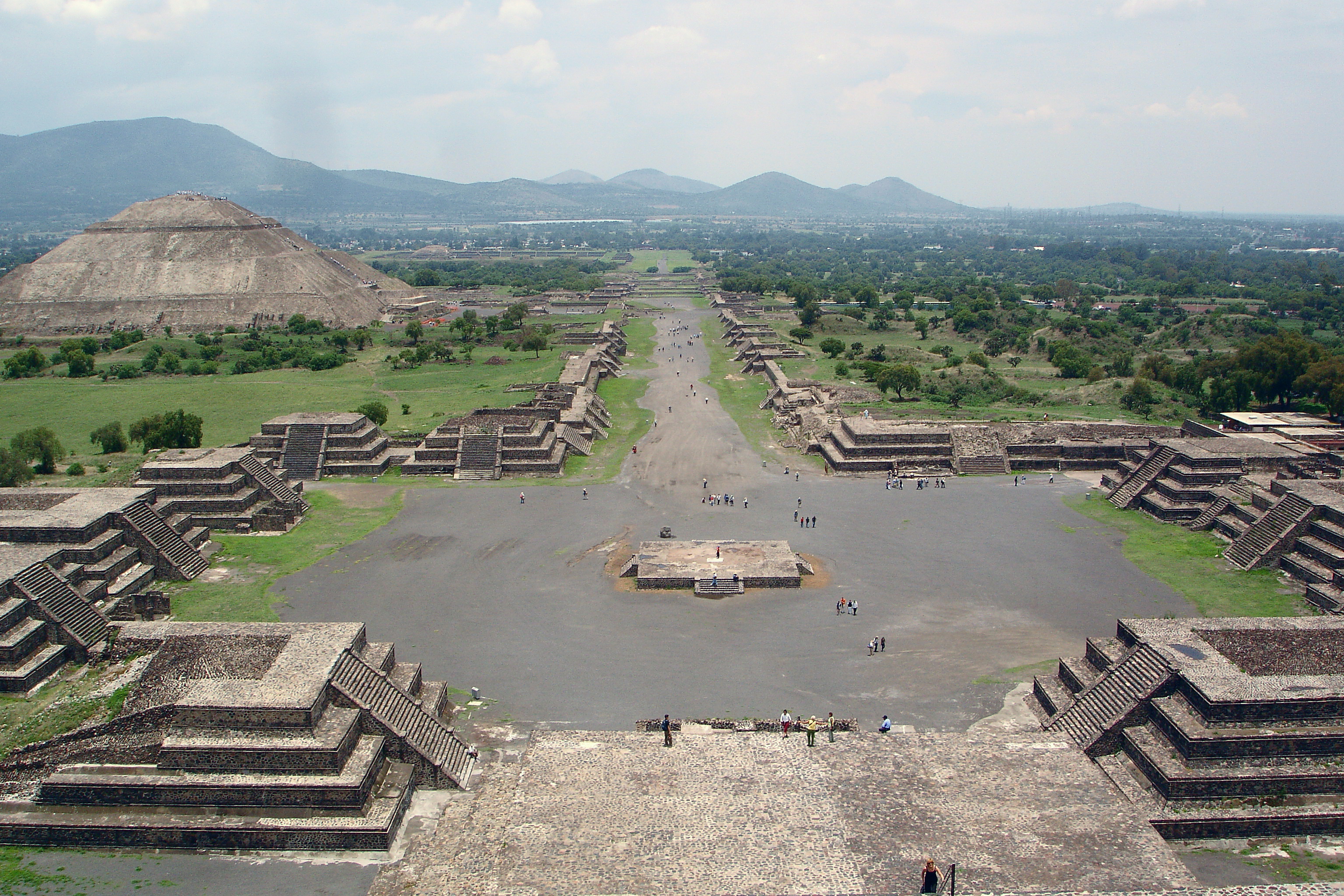
The Teotihuacan Archaeological Zone lies just 50 kilometers (31 miles) north-east of Mexico City. It was made a UNESCO World Heritage site in 1987. Teotihuacan translates as 'City of the Gods'; but that was a later moniker, given to it by the Aztecs, who found the majestic ruins in the 1300s. It is still an impressive area now, with little imagination needed to picture the city in its heyday.

Teotihuacan


No-one knows for sure who did live there. The Nahua, Otomi or Totonac tribes are all strong contenders. Teotihuacan was built around 200 BCE and was abandoned in the 7th or 8th centuries CE. The population, of approximately 200,000 people at its height, left behind a wealth of architecture, there are also plentiful murals depicting the myths, legends, gods and meteorology of the day. Not to mention lots of ceramics and other physical evidence of the inhabitants of this once great city.

Some of those mysteries may be about to be solved with this week's announcement from the National Institute of Anthropology and History (INAH - Instituto Nacional de Antropología e Historia). Using cameras lowered through the roof of the tunnel, archaeologists were able to glimpse one large chamber, with two smaller ones branching away. This is in addition to the tunnel itself which, in a scene reminiscent of an Indiana Jones plot, had been sealed with huge rocks hurled into it.

Speculation is rife that this is the last resting place of whomever ruled Teotihuacan. Sergio Gomez, one of the archaeologists working at the site, has spoken of the thousands of jade items, precious stones, shells and pottery seen in the chambers. There are also ceramics, which are of a style never encountered before. He concluded, "There is a high possibility that in this place, in the central chamber, we can find the remains of those who ruled Teotihuacan."

Teotihuacan


However it will be two months, at least, before the excavation team make it into the chambers themselves. No-one wants to damage the site any more than is necessary to access it, so progress is undertaken painstakingly, at a snail's pace.

It's a case of watch this space, but, in the meantime, enjoy the pictures provided by INAH.
 
HostGator review